
Half of UK universities are in deficit.
One found a better way to convert applicants.
The University of East Anglia replaced direct mail with personalised video. In year one they achieved 800% ROI. In year two they dropped direct mail from that part of their outreach entirely.
Your budget is shrinking.
Your targets aren't.
Nearly half of UK universities finished 2025–26 in deficit. International student numbers have fallen for the second consecutive year. And recruitment targets have not moved to reflect any of this. Marketing teams are being asked to convert more applicants with budgets that are not growing.
The channels absorbing the biggest share of your spend were built for a different era. Direct mail, generic email, blanket digital, they were designed before students made decisions the way they do now. Gen Z moves through a decision journey that is personal, emotionally driven and non-linear. They disengage quickly from communications that do not speak directly to them.
The gap between reaching a prospective student and moving them toward a firm decision has never been wider. The cost of that gap is paid every recruitment cycle, in enrolled students not taken, in revenue not realised, and in marketing spend that did not deliver its potential return.
One video.
Thousands of versions.
Personalised Video Marketing uses your institution's existing applicant data to deliver individually tailored video content to each prospective student. Each video is assembled from a library of short clips, course content, campus life, accommodation, societies, matched to that student's profile and delivered directly to their inbox.
The student receives a video that speaks to them specifically. You use footage you already own. The campaign is tracked end to end.
It is not a new technology. It is a smarter use of what you already have.
Your applicant data
First name, course, level of study, accommodation preference, societies... data your CRM already holds.
Your existing video library
We audit what you have — campus tours, course content, testimonials — and prepare it for data-driven personalisation.
Automated assembly
Each applicant's video is assembled from the right clips for their profile. One version for every individual.
Delivery and tracking
Delivered by email with a personalised thumbnail. Every view, click and conversion tracked and reported.
How UEA converted more applicants and eliminated direct mail.
The challenge
UEA had a large pool of applicants who had expressed interest but not committed. They were spending significantly on direct mail to convert them. The results were not matching the investment.
The solution
We replaced a portion of that direct mail with personalised video, a controlled pilot using footage the university already owned, restructured for data-driven personalisation right down to the individual level.
The outcome
The year-one results were unambiguous. UEA repeated the campaign the following year and eliminated direct mail from that part of their outreach entirely, not because personalised video was exciting, but because the economics were no longer close.
By year three, the campaign had scaled from a pilot of 1,800 videos to 17,500 personalised videos per cycle — 5,000 undergraduate and 12,500 postgraduate students.
Year one result
vs 6–7.5% sector average
for engaged applicants
UEA ran the campaign
"This is the first time we have used personalised video to reach our students and it won't be the last. The results are amazing."Laura Paul — Marketing Manager, University of East Anglia
When can PVM be used?
Key moments across the academic year
- Welcome — new students
- Welcome — returning students
- Join a society or sports club
- Welcome Week itinerary
- Graduation campaigns
- Holiday greetings
- Study abroad
- UCAS application support
- Offer holder campaign
- Firm choice campaign
- Exam guidance
- Graduation
- A-Level Results Day
- Clearing campaign
- Freshers' Week prep
Conversion Revenue EstimatoR
Adjust the inputs below to see how many more students you could convert and what that means for your tuition fee income, based on UEA's verified results.
Annual tuition fees
Your current email performance
Please note: Video delivery cannot be guaranteed to contacts in China and some Far East territories.
Three FREE RESOURCES
Video Content Audit Guide
Most institutions have more video to work with than they think. This guide helps you identify what you already have, what could be repurposed, and where the real gaps are. Takes about 30 minutes.
Download free →PVM Campaign Planner
A comprehensive guide to planning and executing a personalised video campaign; goals, data, timing, messaging, and a campaign checklist. Everything in one document.
Download free →The Case for Personalised Video Marketing
A briefing note making the commercial argument for PVM investment. Evidence-based, written to be forwarded to your CMO, VC or Director of Student Recruitment. Not a brochure; a business case.
Download free →No pitch.
No commitment.
Just a straight
conversation.
If you are interested in what personalised video could do for your student recruitment or just want to pressure-test the idea before taking it further book a 20-minute call.
We will be honest with you about whether PVM makes sense for your institution and your existing content. If it is not the right fit, we will tell you.
Book a 20-minute call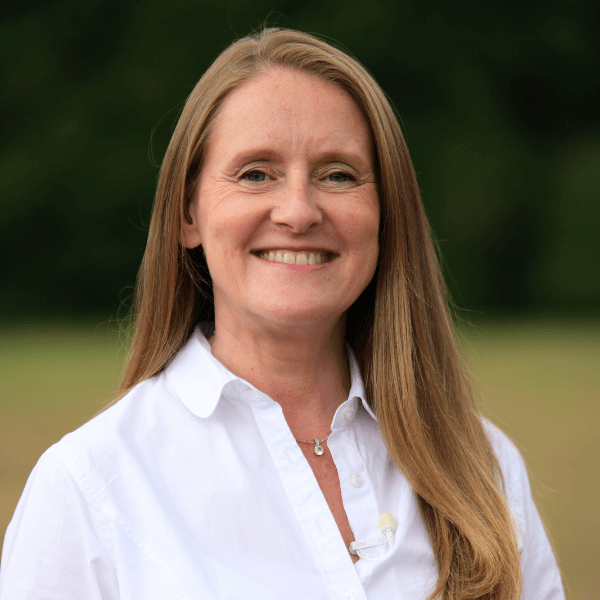
In their own words.
"This is the first time we have used personalised video to reach our students and it won't be the last. The results are amazing."
Laura Paul Marketing Manager, University of East Anglia
"Working with Challenge has been anything but! The whole project ran so smoothly. It was our first personalised video project but Challenge made it easy for both us and our client. The results have been brilliant and we are already working on our next project with this approach."
Leila Bekhit Client Director
Questions.
Answered.
What is personalised video marketing for universities? +
Personalised Video Marketing (PVM) for universities is a digital marketing approach that uses applicant data to deliver individually tailored video content to each prospective student. Each video is assembled from a library of existing clips, course content, campus life, accommodation, societies, matched to that student's profile and delivered by email with a personalised thumbnail. The student receives a video that speaks directly to them. The institution uses footage it already owns.
What results has personalised video marketing achieved in higher education? +
The University of East Anglia achieved 800% return on investment, a 24% click-through rate and a 68% conversion rate for engaged applicants in their first personalised video campaign, compared to a sector average CTR of 6–7.5%. By year two they had eliminated direct mail from that part of their outreach entirely. By year three the campaign had scaled to 17,500 personalised videos per cycle across undergraduate and postgraduate audiences.
Do universities need to produce new video content for a PVM campaign? +
No. Most institutions have more usable video content than they realise. Personalised video campaigns are typically built from existing footage; campus tours, course content, student testimonials, repurposed and restructured for data-driven personalisation. A video content audit is the recommended starting point and takes approximately 30 minutes to complete. Our free Video Content Audit Guide walks you through the process.
How long does it take to set up a personalised video campaign? +
A typical campaign takes approximately eight weeks from project approval to deployment, covering storyboarding, video preparation, platform build, quality assurance, and go-live. Timelines can be adjusted to fit key academic deadlines such as UCAS firm choice, A-Level Results Day, or Clearing.
Which student recruitment campaigns is personalised video best suited for? +
Personalised video works across the academic year; offer holder conversion, firm choice campaigns, Clearing, welcome communications, and postgraduate recruitment. It is particularly effective for converting applicants who have already expressed interest but not yet committed, where a personalised communication can be the deciding factor in a firm choice decision.
Can personalised video replace direct mail for student recruitment? +
Based on the University of East Anglia's experience, yes, for specific conversion campaigns. UEA eliminated the direct mail element of their offer-holder outreach entirely in year two, after year-one results demonstrated that personalised video outperformed it on every measurable metric and the cost comparison was no longer close. A pilot campaign is the recommended approach: prove the economics first, then scale.
WHAT’S YOUR BUSINESS CHALLENGE?