Why most online events underperform & how to make yours stand out

A smarter, behaviourally-informed way to get more from your webinars, panels and virtual events 

Online events aren’t going anywhere.  

Webinars, virtual roundtables and live panels are still top of the B2B marketing agenda with 65% of marketers re-allocating live event budget to digital formats (Forrester). 

But here’s the problem: 
63% of marketers say they fail to maximise the value of their event content. 
And 9 in 10 believe buyers are showing signs of serious event fatigue. 

So what’s going wrong? 

IDEAS TO FIGHT FATIGUE

Most event strategies stop at the broadcast 

We still treat online events like a one-off performance. Build the deck, get the invite out, deliver the session, send the recording. 

Job done. 

But behavioural science and B2B buying behaviour tell us that’s not how decisions are made. Buyers need time, reinforcement, and relevance. Events should be part of a longer journey, not a standalone push. 

Behavioural insight – design for how people really behave 

According to bounded rationality, people don’t make decisions in neat, linear ways. We’re busy, distracted, and often overwhelmed. The best events: 

  • Reduce friction 
  • Amplify relevance 
  • Create clear cues for action
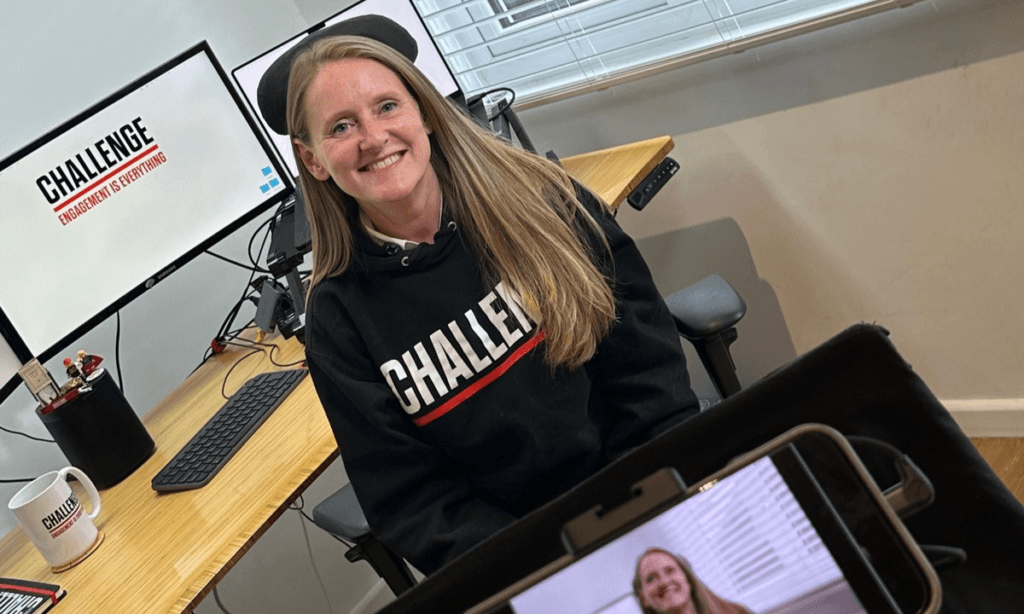
Ginny Follen The London School of Economics and Political Science (LSE) Master of Science - MS, Behavioural Science

"People aren’t optimised content consumers. They’re busy, distracted, and making decisions under uncertainty. Behavioural science calls this bounded rationality.  The best events reduce friction, amplify relevance and create cues for action, because we’re designing for human attention, not perfect logic.

Ginny Follen,
Behavioural Strategist, MSc Behavioural Science (LSE)

We also engage more when our psychological needs are met, autonomy, competence and connection. That’s the essence of Self-Determination Theory, and it’s why: 

  • Personalisation matters 
  • Live interaction drives participation 
  • Thoughtful follow-ups work better than hard closes

Micro yeses - small steps, bigger impact.

Big decisions are rarely made all at once.  Instead, they’re shaped by micro yeses, the small, low-effort actions people take that build momentum and trust.

Instead, they’re shaped by micro yeses, the small, low-effort actions people take that build momentum and trust. 

In the context of online events, a micro yes might be: 

  • Clicking a teaser video 
  • Adding the event to calendar 
  • Answering a one-question poll 
  • Submitting a question in advance 

Each small step increases commitment and primes your audience to engage more deeply when it matters. 

Design your event journey to earn small yeses early and the big yeses will follow. 

A three-phase strategy for smarter online events 

If you want your next webinar to deliver more value, build around these three phases: 

1. Before – create momentum 

  • Use teaser clips or one-question polls to drive curiosity 
  • Tailor invites by role or vertical for personal relevance 
  • Set expectations for value up front (“What you’ll learn, not what we’ll show”) 

2. During – keep attention moving 

  • Use visuals over slides, interaction over monologue 
  • Build in ‘breakpoints’ every 7–10 minutes 
  • Let your audience shape the flow (pre-submitted questions work wonders) 

3. After – build the next step 

  • Repurpose fast: short recaps, key quotes, slides-to-social 
  • Segment your follow-ups based on what people did or didn’t do 
  • Use post-event content to reinforce trust, not just share files 

We unpack each of these phases and the seven tactical levers that sit within them in our playbook.


Real insight, not just reminders

At Challenge, our mantra is engagement is everything. 

That’s why we built a short, practical playbook to help marketers rethink the value of online events. 

It’s not a checklist. 

It’s a smarter framework, grounded in behavioural science, shaped by experience, and built for busy teams who want to get more from what they’re already doing. 

Share